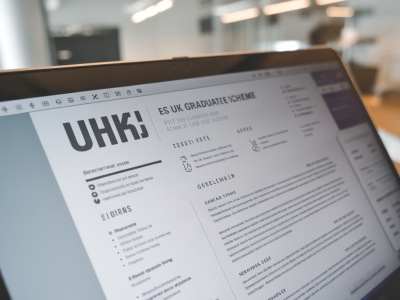
When recruiters in professional services ask for a one‑page CV, they mean business: they want a sharply focused document that proves you can communicate complex information clearly and efficiently. I’ve reviewed hundreds of applications — from graduate trainees to senior associates — and a tidy, well‑structured one‑pager will get you through the first sift far quicker than a long, rambling CV. Below I explain what to include, what to cut, and how to format everything so your one‑page CV looks and reads like the professional it’s representing.
Lead with a compact contact block and location
Your topmost information should make it effortless for a recruiter to contact you and know where you’re based — especially in the UK, where regional hiring practices and hybrid expectations matter.
Include:
Avoid adding your full address — a city and region are enough.
Write a razor‑sharp profile (30–45 words)
Your personal profile is the single most important space to sell fit. On a one‑page CV it must be concise and specific. Think of it as an elevator pitch tailored to professional services.
Good profile structure:
Example: "Analytical second‑year investment banking analyst with strong financial modelling and M&A support experience. Built valuation models that informed two sell‑side pitches; comfortable presenting to senior stakeholders. Seeking a client‑facing advisory role at a mid‑tier firm."
Prioritise experience — lean, impact‑focused bullets
Experience takes the largest portion of your one‑page CV. Be ruthless: include only roles and bullet points that are relevant to the job you’re applying for.
Use 3–5 bullets per role and start each with a strong action verb. Wherever possible, quantify impact — fees saved, revenue supported, size of portfolios, number of clients, % improvement in a process.
Example bullets:
If you’re a graduate with limited professional history, lead with internship highlights and project work (placement year, dissertation project that involved data analysis or client insight). For mid‑career candidates, prioritise recent and relevant roles and summarise older positions in a single line with dates.
Skills section — choose quality over quantity
Professional services recruiters look for a mix of technical, commercial and software skills. Keep this section tight and readable.
Rather than a long list, present 6–10 key skills. If space allows, add a one‑word proficiency indicator (Advanced / Intermediate) but only if you can defend it in interview.
Education — concise and strategic
For early‑career applicants, education sits near the top. For experienced hires, it can be shortened.
Example: University of Manchester — BSc Economics, 2:1 (2019). President, Economics Society; winner of 2018 Investment Case Competition.
Achievements, certifications and professional qualifications
Professional services value formal qualifications. Include them if relevant and current (ACA/ACCA, CFA Level X, SQE, Solicitor qualification route, etc.). Place short technical certifications (e.g. Bloomberg Market Concepts, SQL courses) here too.
If you passed or are studying for professional exams, note the stage and expected completion date.
Optional: succinct interests that show culture fit
Interests are optional but can be useful when they provide behavioural evidence: leadership, teamwork, discipline, or unusual skills that prompt memorable conversation.
Formatting and layout tips for a one‑page CV
The visual design must maximise readability. Recruiters typically spend 7–10 seconds on the first pass.
ATS and keyword strategy
Many professional services firms use applicant tracking systems for sifts. The one‑page format doesn’t mean you ignore keywords — it means you place them strategically.
What to cut — and what to keep
On one page you can’t carry everything. Remove:
Keep:
Quick layout example
| Header | Full name | Job title | Phone | Email | LinkedIn | Location |
| Profile | 1–2 short sentences (30–45 words) |
| Experience | Most recent role — 3–5 bullets; previous roles — 2–3 bullets each |
| Skills | 6–10 targeted skills (technical & software) |
| Education | Institution, degree, grade, dates |
| Qualifications & Interests | Relevant certifications; 1–2 interest lines |
When I review one‑page CVs for professional services roles, the successful ones share the same traits: clarity, evidence and alignment with the job. You don’t need to cram every achievement onto one page — you need the right achievements, described crisply, in the right order. If you’d like, I can review a draft and point out what to keep, what to cut, and how to phrase impact succinctly for a particular firm or role.